Creating bids is often the most time-consuming stage of participating in public procurement. But it doesn't have to be that way at all.

Maciej Kensicki
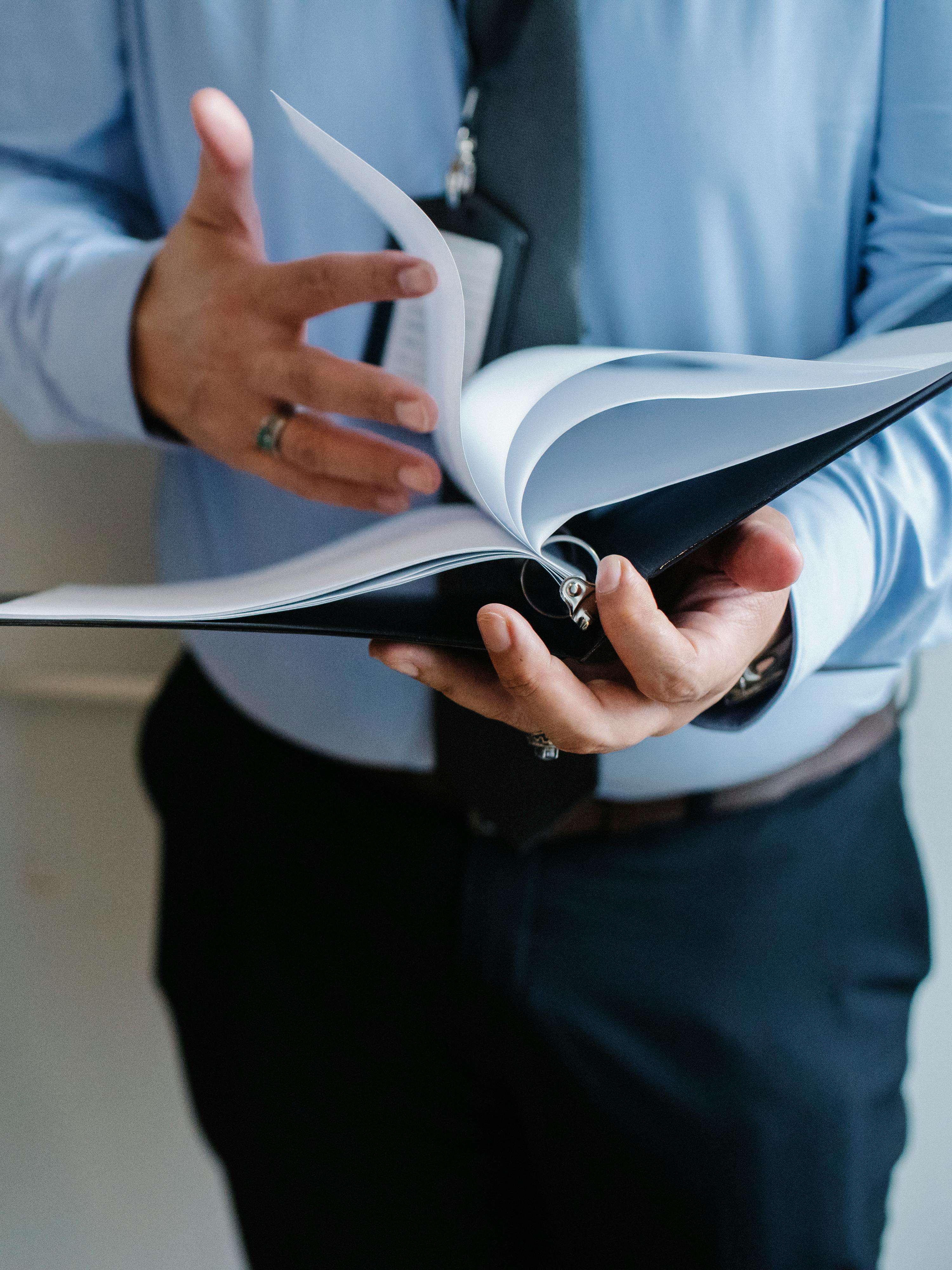
Anyone who has ever had to deal with bureaucracy knows the feeling: a stack of documents, complicated form templates, dozens of tiny details to keep in mind.
One mistake - and the whole task starts all over again.
It is similar in the world of public procurement. And sometimes even worse 😅
📝 What does bid preparation look like today?
The process of creating a bid heavily depends on the industry. It looks different in:
construction works (where bills of quantities or site visits come into play)
product deliveries (where you confirm compliance with specification requirements)
services (where you confirm the qualifications of the involved personnel)
However, regardless of the area, they all share one thing: a complete lack of standardization.
🎭 Theater of the absurd
Theory: You can prepare documents using your own template, as long as they contain all the data required by the contracting authority.
Practice: Officials prefer "their" templates and provide different ones for each tender.
Result: Contractors prefer not to risk it and comply with the required forms.
The effect? Documents must be filled out manually, from scratch, for every single procedure. 🔄
📋 Anatomy of a typical bid
Documentation in an average tender worth between 100k and 10 million PLN usually consists of 10–20 separate files. Most of them are forms to fill out:
📄 1. Bid submission form
De facto a cover letter: company details, representing persons, summary of elements subject to evaluation (price, warranty period, etc.)
💰 2. Price sheet
Detailed valuations: net/gross prices, per unit/package, with various VAT rates, sometimes with information needed to identify equivalent products
✋ 3. Declarations
Confirmations that the company:
Meets the conditions for participation in the procedure
Is not subject to exclusion (no social security (ZUS)/tax office (US) arrears, no support for the aggression against Ukraine, etc.)
The offered goods/services are approved for trading
Really, really provided only true information in the remaining documents 😉
Bonus for procurements above EU thresholds: European Single Procurement Document (ESPD) generated from an XML file on a dedicated portal
🏆 4. References
Confirmation of similar achievements in recent years (ranging from a few to several dozen).
📎 5. Additional attachments
Certificates regarding the people involved in the contract, product data sheets, concept design documentation in creative tenders or construction projects, etc.
⏰ How much time does all this take?
Simple procedure: At least 1 hour of assembling and verifying documents
Complex contracts: Several days of intensive work
⚠️ Time plays a huge role
Companies often find out about an attractive tender when there is very little time left to submit a bid (e.g. less than 24 hours) or when several interesting procedures appear at once.
In such cases, unfortunately, there is no chance to make it in time, and some opportunities must be let go.
In practice, this means that many enterprises participate in fewer procedures than they could. They simply lack the time, people, and resources.
🎯 But why is it worth the effort?
The paradox of public procurement: due to the complexity of bids, many companies give up on participating, which means that competition is sometimes surprisingly low (on average 2.83 bids per procedure).
In more than 1/3 of public contracts, you only need to prepare a correct bid to win a contract with a high margin 🤯
🚀 How Mimira does it?
At Mimira, we radically simplify the bidding process by combining advanced artificial intelligence with many years of industry experience.
🤖 1. Automated data collection
We pull available info from the web (National Court Register (KRS), websites, won tenders) and already prepared data sources from clients (catalogs, price lists, references, etc.).
🧠 2. Continuous learning
Mimira acts like a junior public procurement specialist - learning more with each procedure. We remember the information you provide once and do not ask for it in the future.
✅ 3. Expert verification
All documentation prepared by AI is checked by experts with years of experience in public procurement.
📦 4. Ready-to-use package
The client receives a complete set of documents with signing instructions and technical guidelines for submitting the bid.
💯 5. Zero risk
We only earn money if you do. If you don't win? → You don't pay for the documentation.
⚡ The result?
A process that normally takes hours or days can be completed in just a few minutes.
🎯 From chaos to efficiency
Creating bids is often the most time-consuming stage of participating in public procurement. But it doesn't have to be that way at all.
With Mimira:
✅ You will prepare bids faster and cheaper
✅ You will avoid costly mistakes
✅ You will participate in several times more procedures
Win 10 times at tenders
Mimira is the only AI platform that automates the entire bidding process.
Generate offers with one click
Make use of the AI assistant
Tenders matched to your business