Tenders in the Industry: IT, Software, and Telecommunications - A Guide and Market Report
Are you interested in public procurement in the IT, software, and telecommunications sector? Discover the specifics of the market, proven strategies for winning tenders, and tools that will make your work easier.
Here is a substantive guide prepared with management and sales departments of companies from the IT, software, and telecommunications sectors in mind.
Tender Winning Strategies in the IT and Telco Industry: How to Dominate the Public Procurement Market?
The public procurement market in Poland is a massive opportunity for the IT and telecommunications sector. According to data from the Mimira platform, there are over 6300 tenders available in the IT, software, and telecommunications industry, with about 105 new announcements appearing each day. This is a huge opportunity, but also a brutal confrontation with legal formalism.
How does Mimira help in the IT, Software, and Telecommunications industry?
In the technological sector, tender documentation (OPZ – Description of the Object of Procurement) can be extremely extensive. Reviewing 300 pages of requirements for an ERP system or network infrastructure is work that can take several days.
The Mimira platform dramatically changes these proportions. By employing AI, the system automatically matches tenders to your profile (e.g., "software production" or "cloud services"), allowing you to save up to 90% of the time you previously spent manually searching the Public Procurement Bulletin (BZP).
A key value here is the AI Assistant. Instead of reading through all the documentation, you can ask it: "Does the Ordering Party require an ISO 27001 certificate?" or "What are the SLA requirements for this project?". The AI will respond to you in seconds, providing a specific source paragraph. This is not just a "search engine"; it is analytical support that allows your expert to focus on pricing strategy rather than tedious flipping through PDFs.
Where to look for tenders in the IT, Software, and Telecommunications industry?
A good strategy starts with a broad but precise information funnel. In Poland and the EU, three channels are key:
The Mimira Platform: This is your first and most effective tool. It aggregates data from over 10,000 sources, including ministries, local government units, and state treasury companies. It also monitors purchases financed by grants (e.g., KPO), which is currently crucial in IT.
The Public Procurement Bulletin (e-Procurement portal): The main national source for contracts below EU thresholds.
TED (Tenders Electronic Daily): Mandatory for large contracts above EU thresholds.
Purchasing platforms (e.g., Open Nexus, Marketplanet): Many municipal and energy companies use their own portals.
My advice: Don't rely on manual checks. Set up alerts in Mimira for specific keywords (e.g., "data migration", "SOC", "MPLS network expansion"). In this industry, information about a change in submission deadlines by 2 days can determine whether you submit your offer on time or not.
How to win tenders in the IT, Software, and Telecommunications industry?
Winning is not just about price. In IT, credibility and formal precision are key.
References and certificates: This is often a "do or die" situation. If the tender requires experience in implementing a system for 500 users, do not exaggerate the facts. Use Mimira to quickly catch these requirements during the "Go/No-Go" analysis stage.
Eliminate formal errors: Most companies are disqualified due to a lack of a qualified signature in the correct format (XAdES!) or incorrectly completed JEDZ. The Mimira platform automatically generates tender documentation based on the SWZ, which minimizes the risk of "silly mistakes."
Analysis of information asymmetry: Check who previously fulfilled orders for a specific client. Knowing that a certain office favors a specific technology stack allows you to profile your offer better.
Key challenges in tender documentation (IT, Software, and Telecommunications)
The biggest trap in IT is the vaguely defined Description of the Object of Procurement (OPZ).
The "Basket Size" Trap: Ordering Parties often write: "Supply of equipment with parameters not worse than…". Without automation, it’s easy to overlook a minor parameter of a network card that disqualifies your server model.
Contractual penalties and SLA: In telecommunications, provisions regarding penalties for service unavailability can be drastic. With Mimira, you can quickly extract the penalties section from SWZ and pass it to the legal department even before deciding to bid.
Intellectual property: Does the Ordering Party want the transfer of copyright or just a license? This is crucial for the profitability of your software.
Why is it worth using modern tools in this industry?
You are a technology company – your bidding process should also be high-tech. The digitization of bidding is primarily about scalability. Imagine that your current team, instead of submitting 2 offers a month, submits 20. It's pure statistics: a larger number of offers means more won contracts. Successful IT companies use Mimira to gain that extra 80% of time that the sales department typically "burns" copying data into forms.
Trends, challenges, and opportunities in the IT industry (2025/2026)
Trends: Cybersecurity (implementations mandated by the NIS2 directive), cloud computing for the public sector, and AI projects in administration.
Challenges: Short bidding deadlines with very complicated technical requirements and increasing energy efficiency demands for equipment (Green IT).
Opportunities: Huge funds from KPO for the digitization of schools, hospitals, and offices (e-health).
Current information on tenders (Market Overview)
The market doesn’t sleep. Here are examples of what is currently happening: * Telecommunications: Large proceedings are underway for mobile telephony and mobile internet services for large agglomerations (e.g., Warsaw, deadlines in January 2026). * Infrastructure: The Union Center for Transport Projects is contracting implementation systems (e.g., SCCM), and IBE is looking for experts to update the Sectoral Qualification Frameworks for IT and Telecommunications. * Industry Events: Even organizing conferences (like PIKSEL 2026 in Sopot) is done through a tendering process, opening the field for IT companies offering technical and streaming support.
FAQ – Frequently Asked Questions
What platforms offer public tenders in Poland? The main source is the government e-Procurement portal, but for professionals, aggregators like Mimira that collect data from all bulletins in one place are becoming the standard.
How to prepare an offer for an electronic tender? A qualified signature is essential, as is the consistent submission of attachments in PDF/XAdES format and timeliness. Tools like Mimira help automatically generate declarations, shortening the process by half.
Which companies offer support in preparing tender documentation? The market has specialized public procurement law firms and technology companies like Mimira Prosta S.A., which combines an intuitive platform with access to expert knowledge, verifying the correctness of documents before submission.
How to find tenders related to IT and Telco? The most effective way is to monitor CPV codes (e.g., 72000000-5 for IT services) in the Mimira system, which allows filtering announcements from thousands of sources simultaneously.
What online tools help monitor tenders? Government portals are free but ineffective. Modern companies rely on the SaaS solution from Mimira, which offers automatic SWZ analysis through AI, a market "game-changer" in 2025.
Mimira in the IT, Software, and Telecommunications industry:
6315 – the number of monitored tenders in the category "IT, software, and telecommunications."
160 – the number of companies in the IT, software, and telecommunications industry using Mimira.
Automate tender analysis and save time. See how Mimira can support your team in the IT, software, and telecommunications industry.
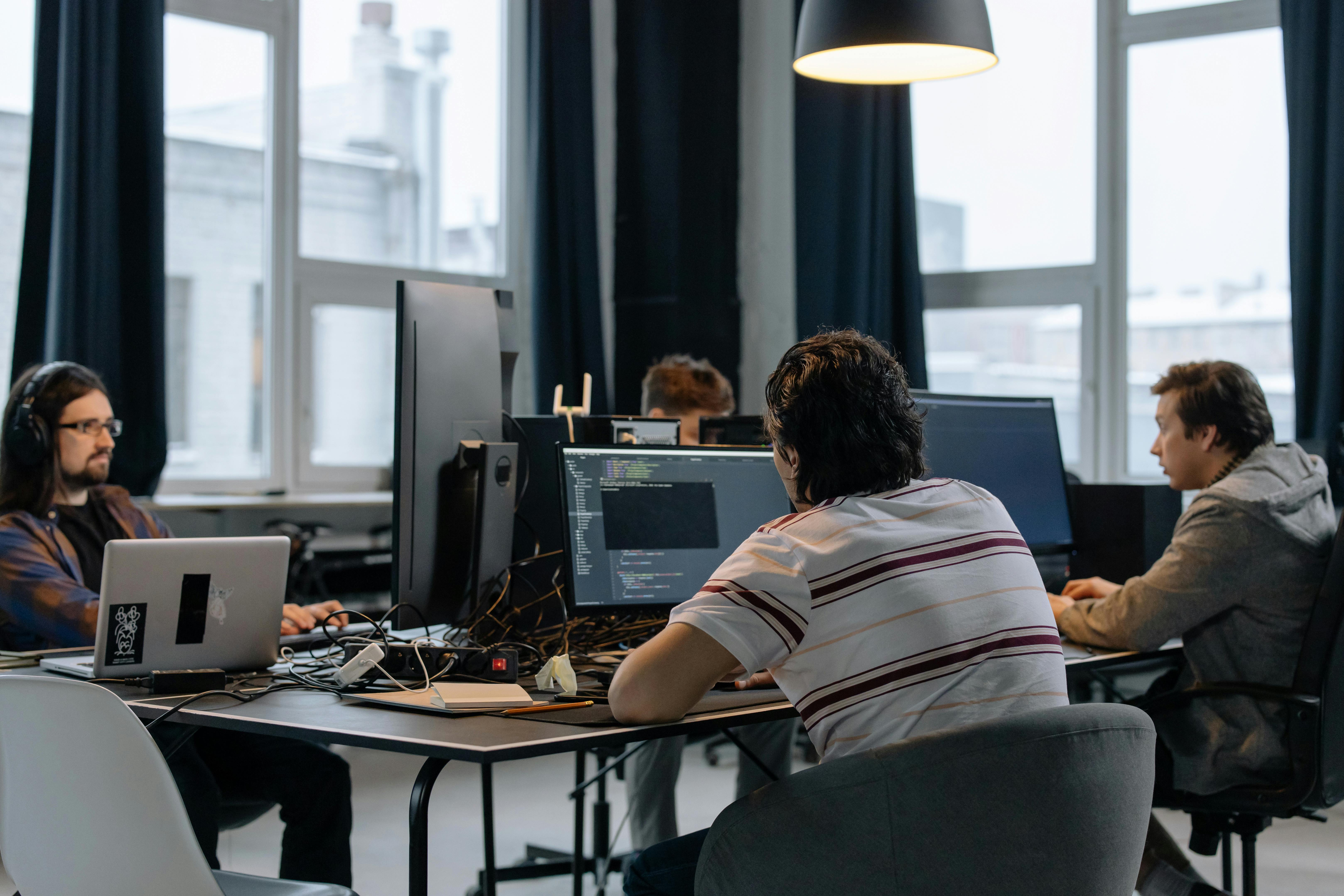
IT, oprogramowanie i telekomunikacja
6,315
Przetargów na platformie
160
Klientów Mimira
105
Przetargów dziennie
620
Źródeł przetargów













Przetargi
Budownictwo i infrastruktura
Przetargi
Transport i logistyka
Przetargi
IT, oprogramowanie i telekomunikacja
Przetargi
Energia, surowce i chemia
Przetargi
Zdrowie i bezpieczeństwo
Przetargi
Usługi biznesowe, finansowe i administracyjne
Przetargi
Rolnictwo, żywność i zasoby naturalne
Przetargi
Przemysł, maszyny i sprzęt techniczny
Przetargi
Usługi społeczne, komunalne, edukacyjne i kulturalne